

Cable Bay – What Next? Look to the Doughnut
Written by Henry Sipos, NCAH Member and Youth Climate Activist
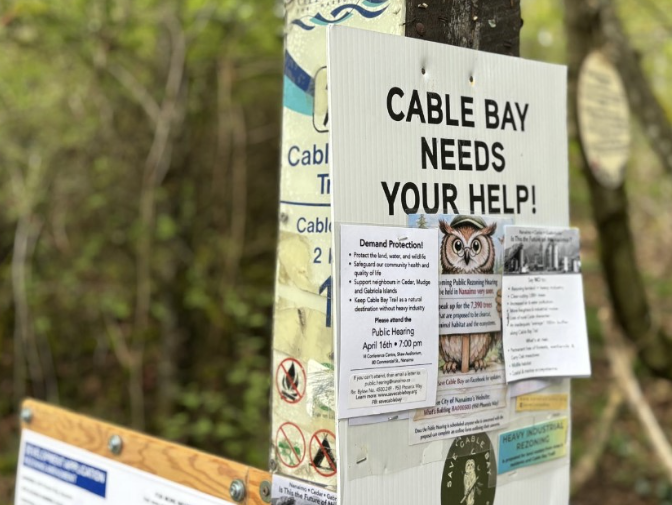
Entrance to Cable Bay trail
Like hundreds, perhaps thousands, of other Nanaimo citizens, I love Cable Bay. Winding its way down to the oceanfront overlooking Gabriola Island and back towards the Nanaimo harbour, the trail is just under 2km long but its value is immeasurable. The Cable Bay area is a vital site providing ecosystem services such as climate regulation, air quality, and biodiversity support. The forest surrounding this area is full of wildlife, including Garry Oak meadows, which are rare and endangered plants.
It also has cultural and spiritual significance for the Snuneymuxqw First Nations and local residents. Even the City of Nanaimo’s website notes Cable Bay for activities such as scenic view, jogging, picnicking, hiking, and beachcoming. This trail is not only a vital ecosystem that contributes to staying within planetary boundaries but also a valuable recreational and cultural space for the community, strengthening our social foundations.
As noted in our previous blog post, “Cable Bay: Urgent Call-to-Action,” a large portion of Cable Bay is under threat of being turned into an industrial site. The residents of Nanaimo are in strong opposition to the Cable Bay rezoning plans expressing significant concerns about environmental, health, safety, and cultural impacts. The initial rezoning application would allow industrial development without community consultation.
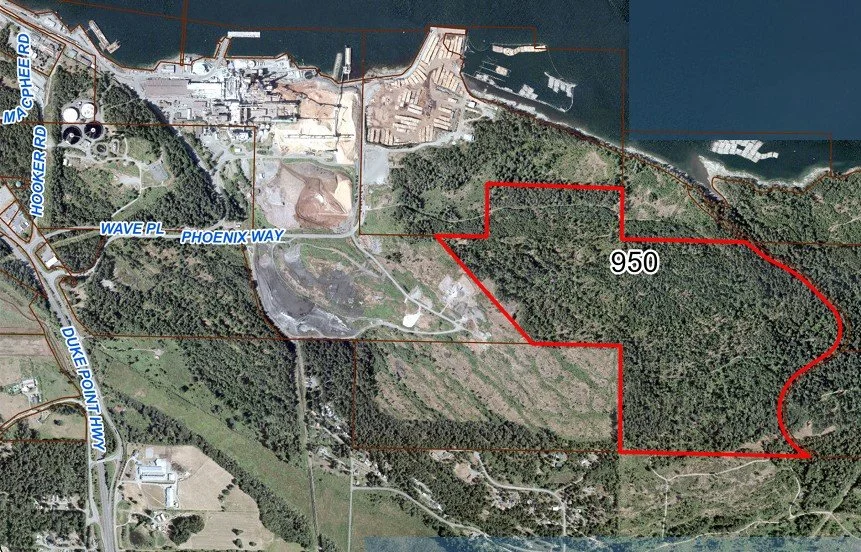
950 Phoenix Way, shaded in red, is proposed to be rezoned by Nanaimo Forest Products for agricultural industrial development. (Image Credit: City of Nanaimo)
Did We Forget About the Doughnut?
In 2020, the City of Nanaimo became the first city in North America to adopt Kate Rathworth’s Doughnut Economic Framework as a model for wellbeing-informed development. The framework monitors the quality of life including environmental and social impacts. Nanaimo localized this model through Nanaimo ReImagined, establishing five community goals: a Green, Connected, Healthy, Empowered, and Prosperous Nanaimo – and citizens can track progress using the Nanaimo Monitoring Bar. The doughnut economic framework prioritizes staying within the ecological ceiling while maintaining social foundations.
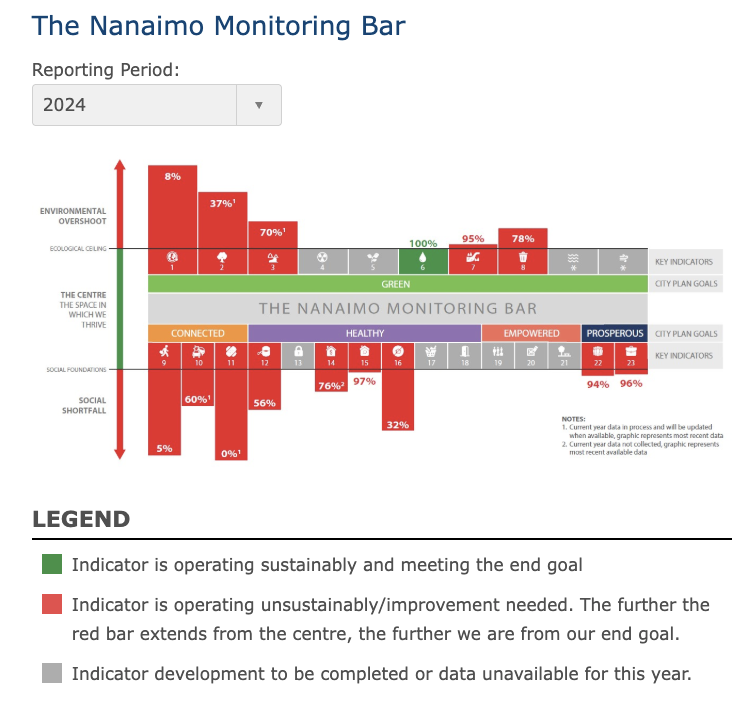
Nanaimo Monitoring Bar based on Doughnut Economics Framework
The Cable Bay rezoning plans are in conflict with both of these initiatives. Allowing the development of heavy industrial projects without significant community consultation not only weakens social foundations and trust, but also allows the implementation of projects that are harmful to the environment.
What Now? As readers no doubt know by now, the rezoning application stalled after massive public hearings in April. Hundreds of residents, alongside elders from the Snuneymuxw First Nation, packed Shaw Auditorium and telephone lines to voice unanimous opposition to rezoning. Where does it stand now? City Council voted to pause the decision and has directed staff to seek changes from the applicant, Nanaimo Forest Products. What is guiding staff in their work to come up with a workable application? Will there be more public hearings if/when a revised application comes back to Council? Is there a chance to get this right?
While “shouldas” aren’t particularly useful, let’s start by looking at how this should have or could have gone down. The lengthy, conflictual and exhausting process we’ve gone through to get to this point perhaps could have been avoided had principles of meaningful community consultation been adopted – including early, continuous and transparent communication involving all stakeholders.
The rezoning project should have been co-designed alongside with the community from planning all the way through eventual implementation. Furthermore, there should have been a prioritization of building trust with the community. Since Nanaimo Forest Products Limited (NFPL), who proposed the rezoning application, failed to meaningfully consult with the community, their project is facing strong opposition as a result of distrust. Regardless of the intentions of the industry, the community does not trust that they will take sufficient measures to mitigate environmental impacts and other concerns such as smell, noise, and fumes that may threaten the enjoyment of the trails.
Consultation with communities, as now we see, is vital to the successful approval and implementation of industrial projects. Nanaimo residents are not against the rezoning project on the basis of NIMBY (“Not In My Backyard) sentiments. They are against the project as it harms their immediate environment and weakens their social foundation while promising to indirectly bring economic prosperity. Hopefully this will be a lesson for the development of future projects that industry cannot implement projects that harm our environment and our communities without our consent. As we see more and more resource projects being fast-tracked in British Columbia, including faster environmental assessment and permitting, it is important that we stay active in monitoring these projects and holding them accountable for protecting our environment and strengthening our social foundations.
Call to Action
With municipal elections coming up in October 2026, it is vital that we elect representatives that uphold the commitment to the Doughnut Economic framework and follow the principles of meaningful community consultation.
*photo credit on main blog page: https://seeingtheelephant.net/blog/