

Become a member!
Whether you are new to Nanaimo Climate Action Hub or wish to renew your membership for 2026, we are thrilled to welcome you to be important part of our movement!
Why become a member? As a member, you help steer the direction of climate action here in Nanaimo. Whether you are interested in volunteering in an organizing capacity, lending your skills to campaign development, engaging in political advocacy, or on-the-ground activism, there is a role for you!
As a member, you are entitled to attend and vote at our Annual General Meeting (AGM), and run to serve on our Board of Directors. You will also automatically receive our monthly newsletter, and other emails, as well as members-only communication.
In 2026 you are invited to join a Climate Action Working Group, and as a member, you will have access to our content and collaboration platform.
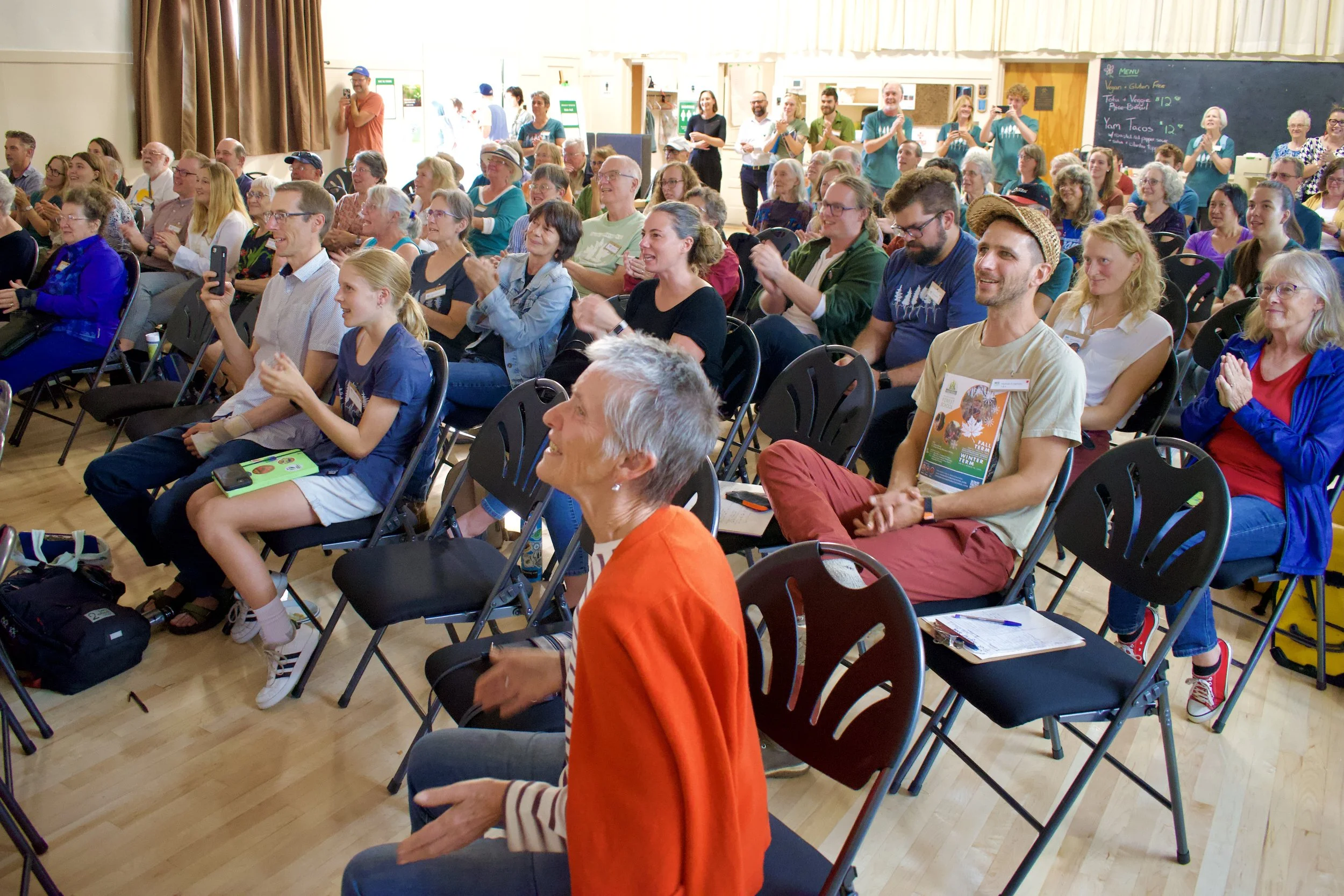
Together we are a powerful voice!
The more members we have, the more we are taken seriously by politicians and other decision-makers.
We hope you will join us!
Who can be a member? If you live in Nanaimo or anywhere in the Regional District of Nanaimo (RDN) and you agree to our membership declaration (see below), we encourage you to become a member of Nanaimo Climate Action Hub!
Membership Fee
Starting in 2026 we are instituting a small annual membership fee to help cover our modest operating costs. You can opt to pay our suggested $5.50 minimum, a larger amount, or select to support the work of Nanaimo Climate Action Hub through monthly contributions. If you prefer, you may pay via e-transfer or using cash at our next in-person event. If you cannot afford to pay a membership fee, no problem — we welcome you as a member regardless.
Membership declaration:
- I share Nanaimo Climate Action Hub’s sense of urgency about the global climate emergency
- I believe we need effective policies and initiatives that will make it possible for all citizens, businesses and organizations including those in the City of Nanaimo and the Nanaimo Regional District to reduce their climate pollution to as close as possible to zero by 2030