

COP30 Recap: A VIU Student’s Personal Take
Henry Sipos is a student at Vancouver Island University (VIU), majoring in Political Studies. In 2025 he was selected as a scholar for the Queen Elizabeth II Diamond Jubilee Scholarship (QES). Henry is currently an intern with Nanaimo Climate Action Hub. Henry recently returned from COP30 and we asked him to share his experience here.
This November, I had the incredible opportunity to attend COP30 in Belém, Brazil alongside my fellow Queen Elizabeth Scholars from Vancouver Island University. Being present at this monumental international climate negotiations offered firsthand insight into the gap between global climate promises and meaningful action.
What is COP?
The Conference of the Parties (COP) is the United Nations’ annual international climate summit, where nearly every country in the world gathers to negotiate collective climate action. Parties discuss, adopt, and take decisions based on consensus, a process that depends on cooperation, political will, and the ability to align shared interests.
COP30 marked a decade of the Paris Agreement; a legally binding treaty on climate change that established the goal of keeping global temperature rise below 2°C above pre-industrial levels, ideally 1.5°C. This year’s conference focused on moving from climate commitments to practical implementation.
My COP30 Experience
I was in Belém from November 16-21st. On our first day, we attended the People’s Summit, an event running adjacent to COP30 but open to the public. It serves as a platform for civil society to voice concerns, propose solutions, and hold governments accountable. We had the privilege of witnessing the official Declaration of the People’s Summit Toward COP30, a call for climate justice urging a paradigm shift away from capitalism and market-driven interests toward ambitious climate action, international cooperation, and people-centered transition to a green economy. This event was truly powerful. Standing among a diverse crowd, including students, activists, NGOs, and Indigenous peoples, from different backgrounds and lived experiences, I witnessed a deep sense of unity and shared commitment to environmental protection and human rights.
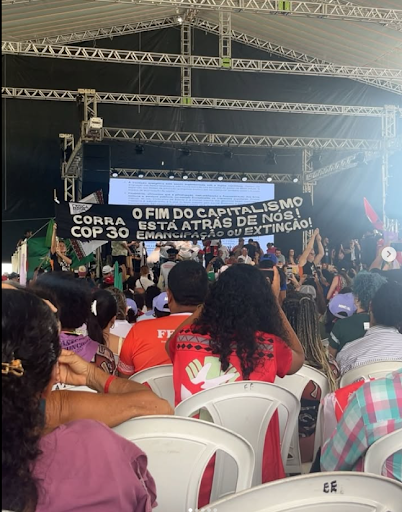
Declaration of the People’s Summit Towards COP30
Accessing the Negotiations
Initially, we did not have access to the official negotiation spaces. However, through connections with Canadian civil society organizations such as AQOCI and Environmental Defence Canada, we were able to secure passes for the final day of negotiations. These organizations expressed overall dissatisfaction with Canada’s presence at the COP, noting a general lack of ambition in its commitments and an underwhelming contribution to climate finance. While civil society had limited opportunities to question government delegates, there was no meaningful space for collaboration or co-creation of solutions, which I found discouraging.
The Final Day at COP30
The last day of COP is notoriously intense. Meetings overlap, negotiations stretch late into the night, and decisions are rushed as delegations prepare to leave. While we did not have access to negotiation rooms, we attended several press conferences hosted by civil society organizations from around the world. A consistent theme emerged: frustration. Civil society criticized the vague language and lack of ambition in the final negotiated text, particularly around just transition and implementation mechanisms. Governments were urged to live up to their promises of making COP30 a turning point from rhetoric to action.
We also learned that industry and business actors, including fossil fuel lobbyists, were highly visible at COP30, accounting for roughly one in every 25 participants. The civil society reported that they did not have engagement with these actors. In fact, they expressed anger and frustration at their presence, given historical clashes on climate accountability. While I understand this frustration, I also saw this lack of dialogue as a missed opportunity. Transitioning to a sustainable economy ultimately requires constructive dialogue across government, industry, and civil society to align strategies and accelerate implementation.
There is an opportunity for civil society to engage with industry actors to form strong, cross-sector climate coalitions that are able to help increase pressure on governments and drive more ambitious climate action.
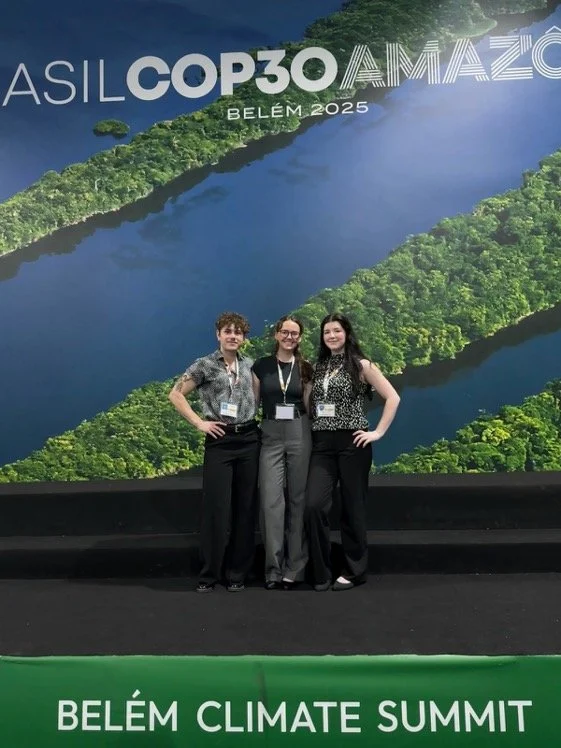
QES Scholars at COP30 (Henry on left)
Final Reflections
The final negotiated text received widespread criticism for an overall shortage of ambition and weak implementation language, particularly regarding the linkage between energy transition and just transition. Still, what stayed with me most from COP30 was not the shortcomings of the final agreement, but the strength and unity of civil society. What remained memorable for me is seeing people from across the globe come together and stand behind a shared vision. It reinforced the idea that climate action is a collective good, one that uplifts communities, protects the environment, and advances human rights for all of us.
Looking Ahead
If COP30 made anything clear, it’s that civil society must continue pressuring the government to step up. The path forward requires mobilization, strong advocacy, and louder public pressure to shift from promises to real implementation, especially as the effects of climate change intensify.