

Book Review: Clearing the Air, by Hanna Ritchie
Written by Zack Simon, Director, NCAH Board
For decades, news outlets and public discourse have been steeped in climate gloom. We’ve seen countless articles and claims that the world is ending and that there’s nothing we can do to change it, but also confusing counter-arguments that it’s all a left-wing hoax, or that increased oil and gas production is the way we’re going to solve the world’s problems.
As someone who’s been working in the fields of carbon accounting, environmental sustainability, and regenerative land management for the past 15 years, I’ve fallen victim to the doom-and-gloom narrative at times. Reading one study after another, watching projections about our future shift — it can feel a bit like staring into the void and hoping it blinks before you do.
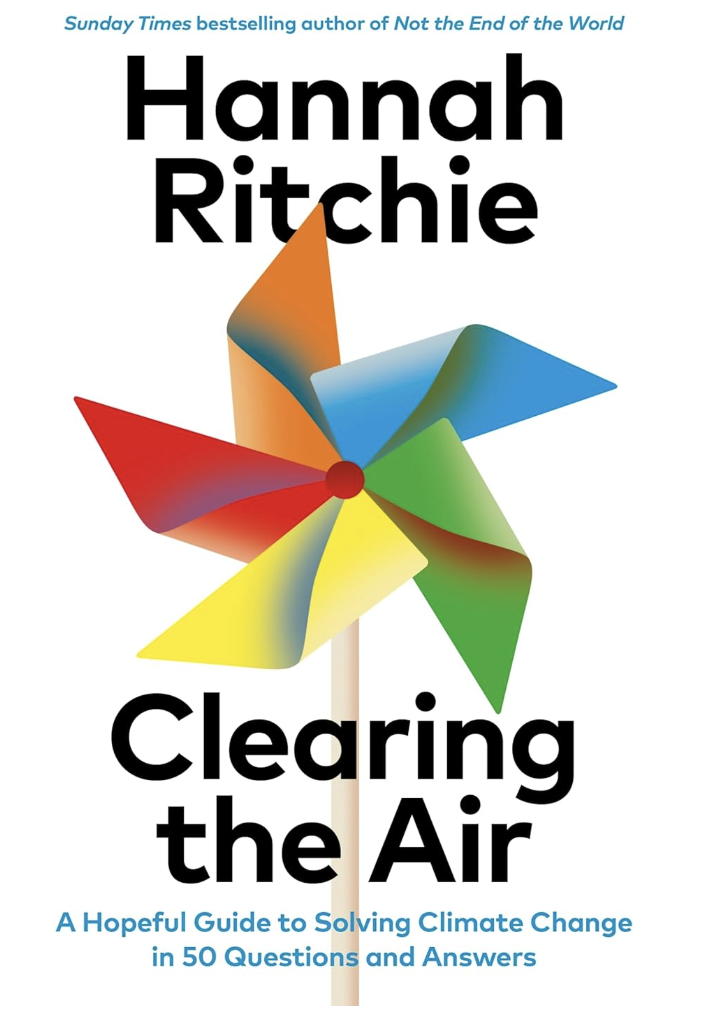
However, earlier this year, I felt this tension finally break after reading a new book called Clearing the Air, authored by Hannah Ritchie (of Our World in Data). The book asks and answers 50 big questions around climate change, the modern worst-case scenario (which is less bleak than our worst fears ~20 years ago), our best courses of action moving forward, and much more. It dives into the most current, data-driven thinking on fossil fuel use, different sources of renewable energy, electric vehicles, mineral scarcity (or lack thereof), heating and cooling, food production, industrial challenges, carbon removal, and geoengineering.
A few examples of strong takeaways that stood out (direct from Ritchie) include:
· “Every tenth of a degree matters. There’s no point at which it’s too late to limit warming and reduce damage from climate change.”
· “Electric cars are much more efficient than internal combustion engines, using three to four times less energy.”
· “Jobs in fossil fuels will decline, but clean energy is creating even more of them.”
· “Nuclear power is not risk free, but it’s one of the safest energy sources we have.”
Every question is asked directly, answered succinctly, then backed up with modern, relevant data and a clear-eyed, journalistic approach to each topic. When I picked up this book, I feared it might be putting a hopeful spin on a hopeless subject. By the time I’d finished, I felt my dread begin to melt and be replaced by hope and determination to do more within my community.
For anyone struggling to think of the future as anything but a bleak end to civilization as we know it, I urge you to read this book — things are much more hopeful than you might realize.