

Why Nanaimo Climate Action Hub Belongs at VegFest
Written by Guest Contributor Lynn Creasy, NCAH Member and Plant-Based Food Advocate
When most people think about the causes of climate change their minds jump immediately to emissions from the burning of fossil fuels. Of course, they wouldn’t be wrong. But there’s more to the picture than vehicle exhaust pipes and building heating systems. Sure, when urged to think about the relationship between food and climate change, one might scrutinize emissions from the food transportation angle (how far did this banana travel to get to my smoothie??). But there’s much more to the food/climate equation that most of us don’t think about.
In 2024, the Government of Canada reported that 10% of Canada’s total greenhouse gas emissions came from the agriculture sector – that’s 70 megatonnes of carbon dioxide equivalent (CO2e)! An increase in fertilizer use bumped this number up 1% from 2023. But why does this matter?
To put into perspective, according to the Animal Nutrition Association of Canada (ANAC), in 2024, 80% of barley, 60% of corn, and 30% of wheat grown domestically were being utilized in animal feed manufacturing. This means a huge portion of the grains grown in Canada are being cycled through the livestock system instead of being used for human consumption. So, when fertilizer use increases, particularly nitrogen fertilizer commonly used by farmers, we are releasing more carbon dioxide (CO2) and nitrous oxide (N2O) into the atmosphere, ultimately adding more fuel (emissions) to an already massive feed system (28.9 million tonnes of feed to be exact).
The goal here isn’t to blame farmers but is to improve our understanding that these systems are all interconnected and small dietary shifts like incorporating more plant-based meals can translate to a reduction in emissions. By shifting to a vegan diet, one individual can reduce their carbon footprint by 2.1 tonnes annually!
Use the Nanaimo Carbon Calculator to check out your personal climate impact.
The VegFest Crowd is Already Speaking Our Language
We often spend a lot of time trying to engage people who are just beginning to think about sustainability. At VegFest, many attendees are already asking questions like:
How can I reduce my environmental impact?
What are practical changes I can make?
How do my food choices connect to larger environmental issues?
What local organizations are doing meaningful climate work?
In other words, we’re not starting the conversation from scratch, we’re joining a conversation that’s already happening.
We know that North America’s red meat, poultry, dairy, and egg consumption exceeds any other world region. We would need to reduce our intake of these significantly to meet the requirements for a sustainable diet. Remember those facts about crops grown in Canada? Well, you might not be surprised to learn North America is ranked one of the lowest in the world for consumption of whole grains.
Let’s focus on beef production, cows are ruminants - meaning they have a complex digestive system that enables them to digest tough, fibrous material like grass. These animals tend to have greater greenhouse gas effects due to belching out methane (CH4). But that isn’t the only reason, cattle also takes longer to grow and reproduce, requiring much more feed and land than any other type of animal.
The conversion of land for beef production and animal feed alone is actually the leading cause of deforestation in some tropical regions like the Amazon.
The Food Story is a Climate Story
Let’s be honest: food is one of the easiest ways people experience environmental issues in their daily lives. Before every meal reaches your plate it has already used land and water, required energy, and produced emissions; we are interacting with environmental systems multiple times a day just through what we eat. Nanaimo Climate Action Hub can use VegFest to connect the dots between:
Climate Change Mitigation
Climate Change Adaptation
Greenhouse gas emissions
Land use and deforestation
Community and Government Engagement
Did You Know? Animal agriculture accounts for up to 25% of global GHG emissions and 65% of global nitrous oxide. If we don’t all work together to regularly eat plant-based meals, animal agriculture will account for 70% of global GHGs by 2050.
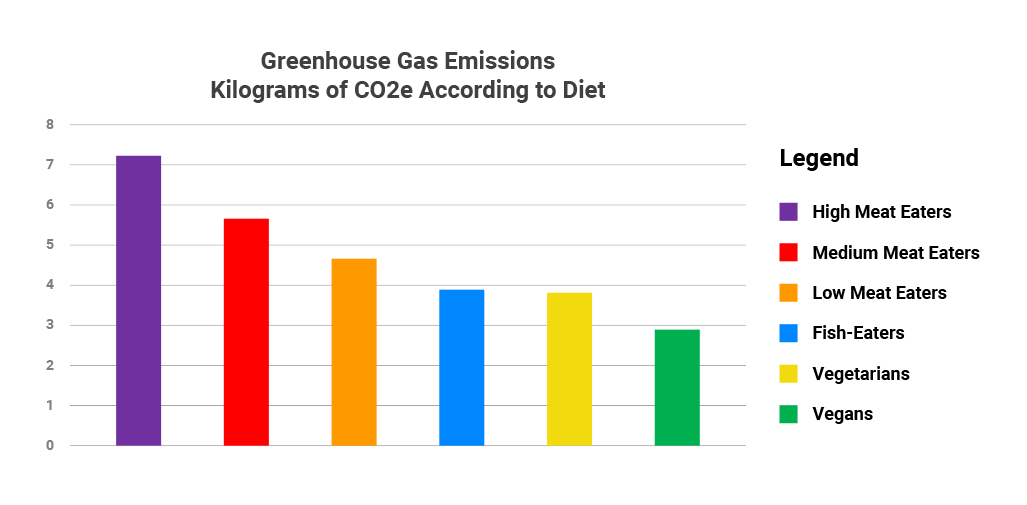
The key is not to lecture people – it’s to invite them into a bigger picture. VegFest attendees are often eager to learn how individual choices fit into systemic climate solutions.
For Nanaimo Climate Action Hub, that atmosphere matters. Instead of asking people to confront a crisis, we have an opportunity to invite them into a movement. That shift – from fear to possibility – can make our message more memorable and more motivating.
This is why Nanaimo Climate Action Hub attends VegFest Nanaimo every year!