

Youth in Action : The Push for Free Bus Passes for Adolescents
This post is written by Reghan Anderson, Board Director and High School Liaison
Up until last month, the principle of high school students paying for their access to buses was unquestioned. Despite the clear benefits of public transportation for both civilians and the environment, Nanaimo had made no movements to make this resource more accessible to youth. That is, until last month, when a delegation consisting of students from Dover Bay (Japleen Kaur, Lincy John, Dyna Paikada), John Barsby (Venice Tran), NDSS (Rachel Christian), Cedar (Cassidy Eklund), and Wellington (Sophia and Bela Castillo) decided to speak up, proposing the Free Bus Passes for Youth Under 18 Initiative. This movement aimed to address the barriers keeping youth from sustainable transportation, by providing free bus passes to all students aged 13-18.
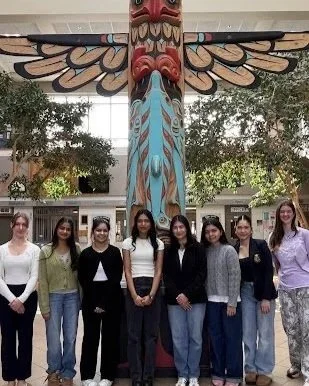
Delegates from across the District before presenting to the RDN
In a study conducted by Dover Bay students, it was found that upwards of 1,375 of the 8,000 students aged 13-18 in the Nanaimo School District rely on buses to get to school, work, and extracurricular activities. A large portion of students reported that their access to the public transit system was limited by financial insecurity. Whether that meant that the students could not afford a bus pass, or that it was just too much of an inconvenience for them to have to pay for their rides. Either way, it was clear that the prices of bus passes had a direct, negative, effect on youths' ability to rely on public transportation.
Why is it important for youth to have access to public transport?
There are several key reasons for why this is important. For one, youths are relied upon to work evening and weekend shifts, which often requires travel to access. Secondly, teenagers have a large impact on the economy; supporting the leisure economy by attending concerts, cafes, and community spaces. These are just a few examples of the reliance our city has developed for the services of youth, but I would also like to draw the attention to the environmental benefits of public transport. As most of us know, buses are a very efficient way of cutting down on CO2 emissions. Transitioning to public transportation has been proven many times over to be one of the easiest changes individuals can make to lower their overall carbon footprint. Furthermore, on a regional level, the city of Nanaimo has made several commitments to reduce community-wide emissions. By providing youth with free bus passes, the youth delegates from across the district reasoned that it would be a way to equip teenagers with sustainable transportation habits. This investment would instill in the next generation the habit of being environmentally mindful of their method of transportation.
The U18 Free Bus Pass Initiative
Transitioning to free bus passes for almost 8,000 teenagers across the district is, of course, not an easy process. The delegates from across the district have undergone a long and continuous process of approvals and presentations to obtain their vision, starting January 27th, when Dover Bay students Dyna Paikada, YiHang Li, Lincy John, Selina Ma, and Japleen Kaur presented their case at the RDN Transit Committee meeting. From there, they obtained a staff report, and modified their presentation for their second meeting with the RDN, March 17th. During this period, the NCAH also provided feedback concerning their presentation and staff report, as well as a letter of support focusing on the environmental benefits of this program. On March 17th, the youth delegation presented to the full RDN committee, with great success. The motion of free bus passes for youth under 18 was greeted with great support by council members, and the initiative was passed by a clear majority.
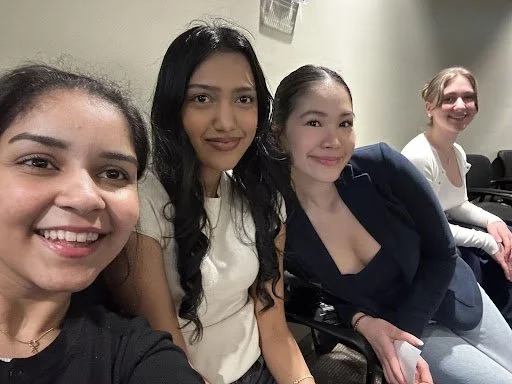
Delegates from across the District before presenting to the RDN
Going Forward
To validate the incredible effort of the young delegates, and benefit both our community and our environment, it is vitally important that youth in our community take advantage of this opportunity. The initiative will be reevaluated by the RDN in two years, and I believe it is essential that by that time, the youths of Nanaimo have taken up this opportunity. It is more than just transport, it is taking the first steps towards a greener community, and building sustainable habits for youth to carry into adulthood. So, to conclude, I challenge you to use this window of opportunity to communicate with youths in your lives, to encourage them to make the most of this meaningful initiative.